Identify the play moment
The team first asks whether the product is meant for tummy time, stroller travel, crib-side comfort, high-chair distraction, gifting, or a textile refresh.
Choosing a soft toy, play mat, fabric book, or nursery textile should feel practical instead of confusing. Lamaze structures support around age, routine, texture preference, care needs, and gift timing so families and retail partners can move from a broad product list to a focused recommendation.
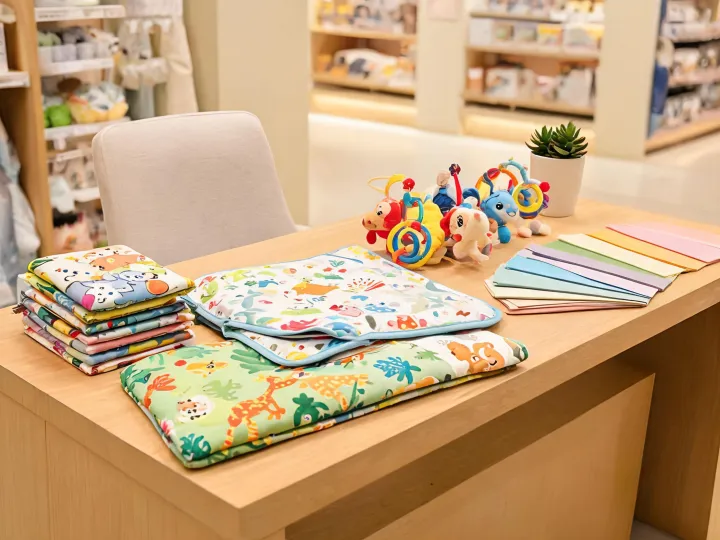
Lamaze support is intentionally concrete. Instead of asking families to decode every feature, the service path compares the child stage, the planned use moment, care expectations, and the type of sensory response a caregiver wants to encourage. This keeps advice grounded in daily life: floor play after a nap, a stroller walk, a grandparent gift, or a soft item that belongs in the nursery rotation.
Recommendations begin with whether the child is mostly looking, reaching, rolling, sitting, mouthing, grasping, or beginning pretend play. The service language avoids pressure and focuses on observable readiness.
A stroller toy, play mat, soft book, and nursery textile each solve a different moment. Support compares where the item will actually live so the choice does not become another unused gift.
Caregivers can ask for crinkle, mirror, ribbon, ring, plush, chew-friendly, or quiet comfort cues. The answer balances variety with calm so a baby has something inviting but not overwhelming.
The team can frame options for baby showers, first birthdays, travel bags, daycare cubbies, or a simple restock of everyday nursery pieces that need to clean easily and feel familiar.
The Lamaze service method is built for caregivers who want a plain answer, not a technical lecture. Each step narrows choices while respecting that babies develop at different speeds and families have different routines. A toy that is perfect for one home may be too busy for another, so support keeps the conversation specific.
The team first asks whether the product is meant for tummy time, stroller travel, crib-side comfort, high-chair distraction, gifting, or a textile refresh.
Guidance then connects the moment with age cues such as contrast watching, grasp practice, hand-to-mouth exploration, supported sitting, and early naming.
Material feel, surface softness, attachment style, wash expectations, and noise level are reviewed so the product fits the caregiver as well as the child.
The final answer is usually a short list, pairing one sensory activity item with one practical nursery or travel item for a balanced starting point.
Share age, use case, and texture preference, and Lamaze will help narrow the product path to a practical next step.